

Baxter has had an impressive run over the past six months as its shares have beaten the S&P 500 by 14.5%. The stock now trades at $27.42, marking a 26.2% gain. This was partly thanks to its solid quarterly results, and the run-up might have investors contemplating their next move.
Is there a buying opportunity in Baxter, or does it present a risk to your portfolio? Check out our in-depth research report to see what our analysts have to say, it’s free.
Why Do We Think Baxter Will Underperform?
We’re happy investors have made money, but we’re passing on Baxter for now. Here are three reasons why there are better opportunities than BAX, plus one stock we’d rather own.
1. Weak Constant Currency Growth Points to Soft Demand
We can better understand Medical Devices & Supplies - Diversified companies by analyzing their constant currency revenue. This metric excludes currency movements, which are outside of Baxter’s control and are not indicative of underlying demand.
Over the last two years, Baxter’s constant currency revenue averaged 2.6% year-on-year growth. This performance slightly lagged the sector and suggests it might have to lower prices or invest in product improvements to accelerate growth, factors that can hinder near-term profitability. 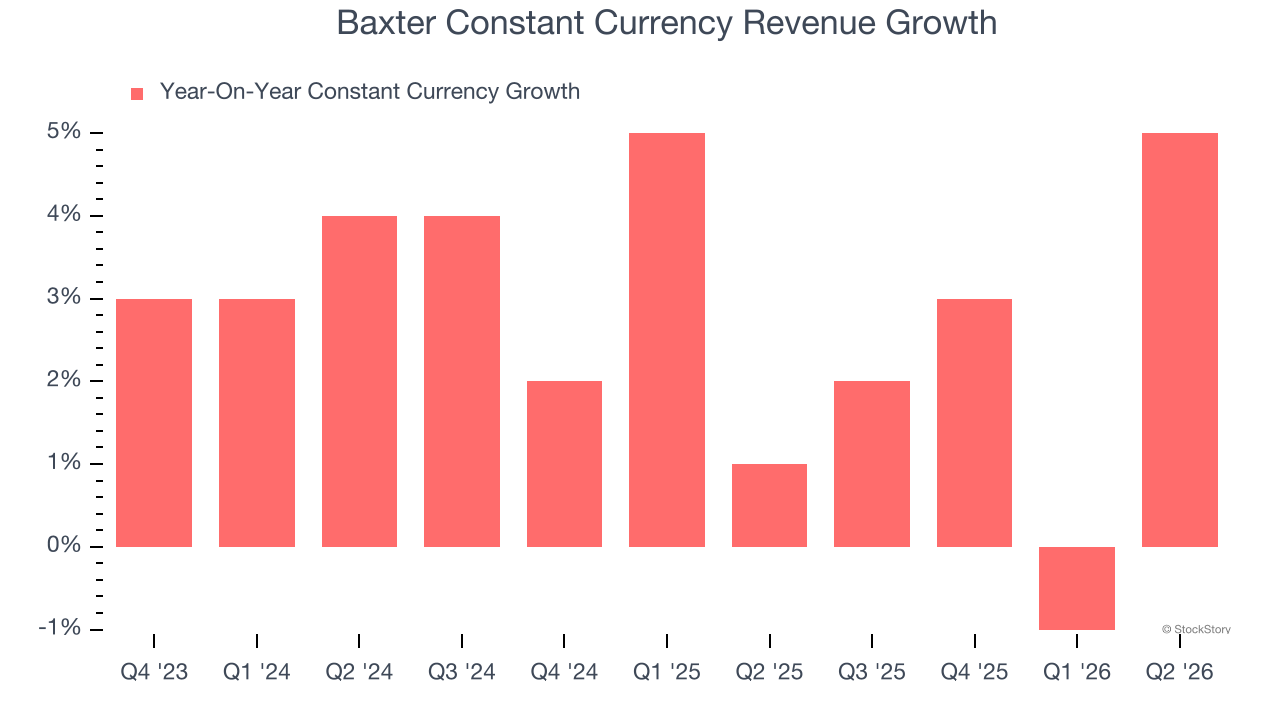
2. EPS Trending Down
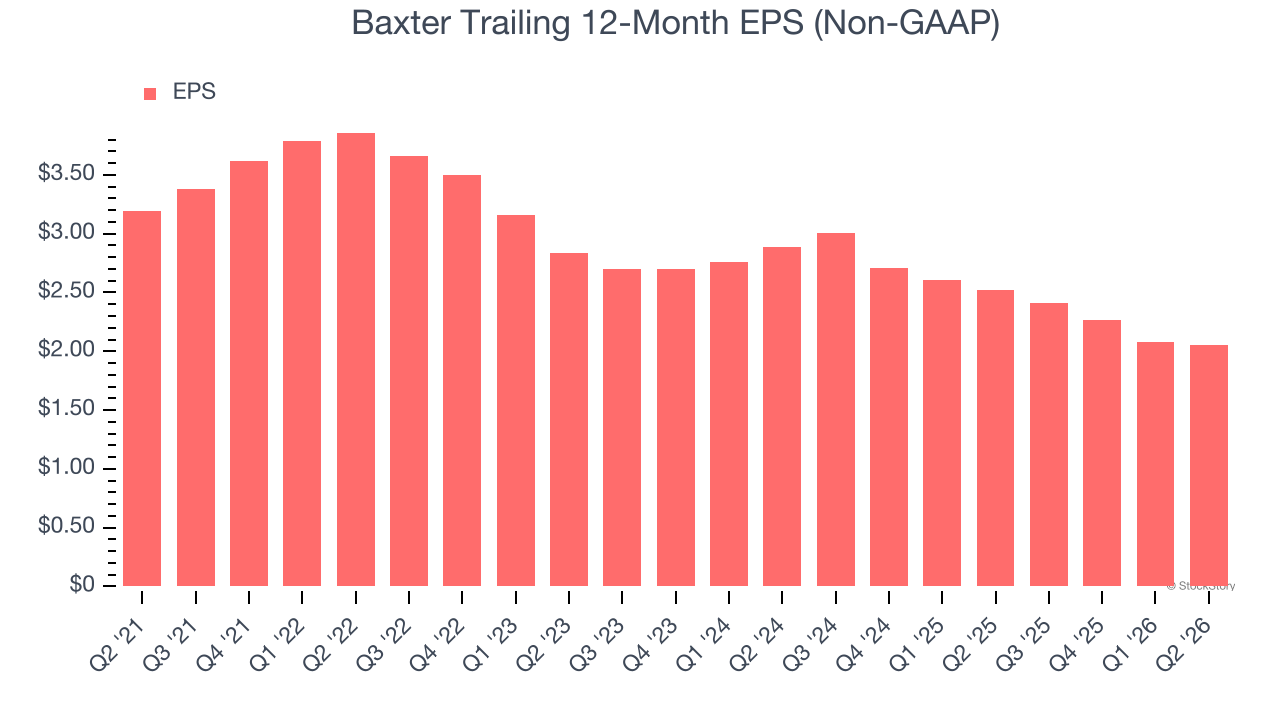
We track the long-term change in earnings per share (EPS) because it highlights whether a company’s growth is profitable.
Sadly for Baxter, its EPS declined by 8.5% annually over the last five years, more than its revenue. This tells us the company struggled because its fixed cost base made it difficult to adjust to shrinking demand.
3. Previous Growth Initiatives Have Lost Money
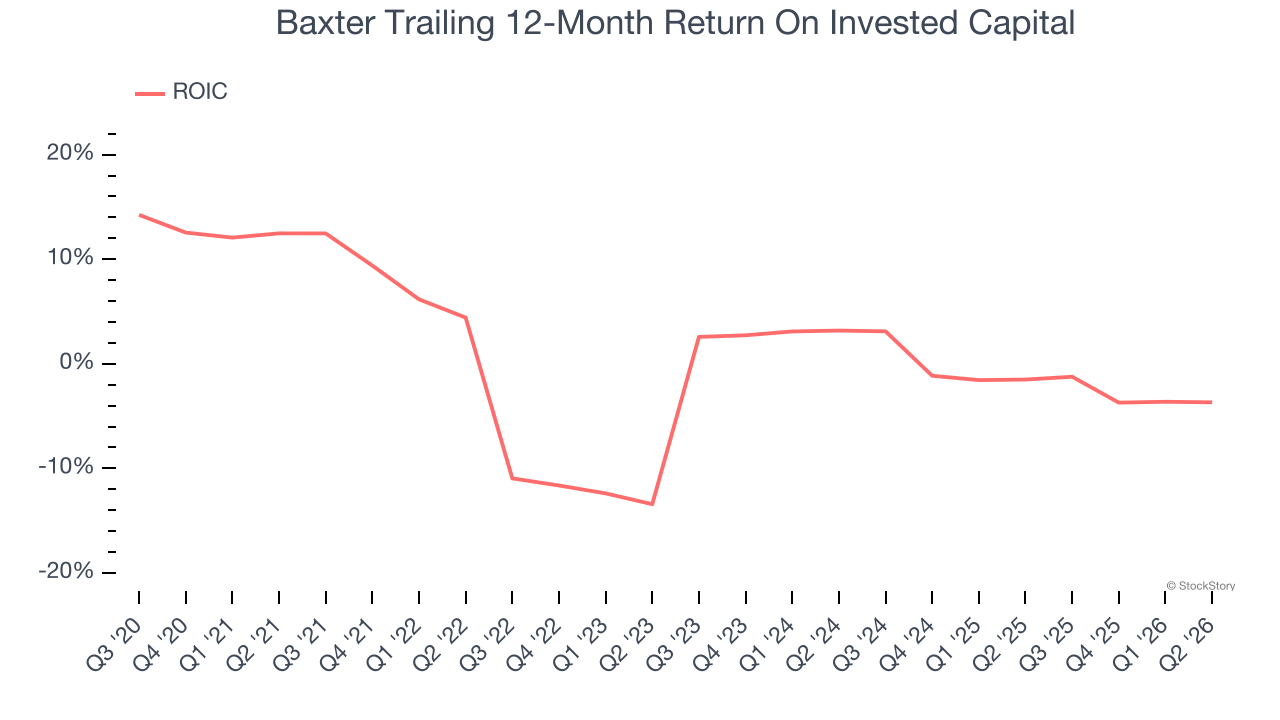
Growth gives us insight into a company’s long-term potential, but how capital-efficient was that growth? A company’s ROIC explains this by showing how much operating profit it makes compared to the money it has raised (debt and equity).
Baxter’s five-year average ROIC was negative 2.2%, meaning management lost money while trying to expand the business. Investors are likely hoping for a change soon.
Final Judgment
Baxter doesn’t pass our quality test. With its shares topping the market in recent months, the stock trades at 13.5× forward P/E (or $27.42 per share). This valuation tells us it’s a bit of a market darling with a lot of good news priced in - we think other companies feature superior fundamentals at the moment. Let us point you toward the most dominant software business in the world.
Stocks We Would Buy Instead of Baxter
ALSO WORTH WATCHING: Top 5 Momentum Stocks. The best time to own a great stock is when the market is finally noticing it. These aren’t just high-quality businesses. Something is happening with them right now. Elite fundamentals meet near-term momentum — both boxes checked at the same time.
Find out which stocks our AI platform is flagging this week. See this week’s Strong Momentum stocks — FREE. Get Our Strong Momentum Stocks for Free HERE.
Stocks that have made our list include now familiar names such as Nvidia (+1,460% between June 2020 and June 2025) as well as under-the-radar businesses like the once-small-cap company Comfort Systems (+1,154% between June 2020 and June 2025). Find your next big winner with StockStory today.